
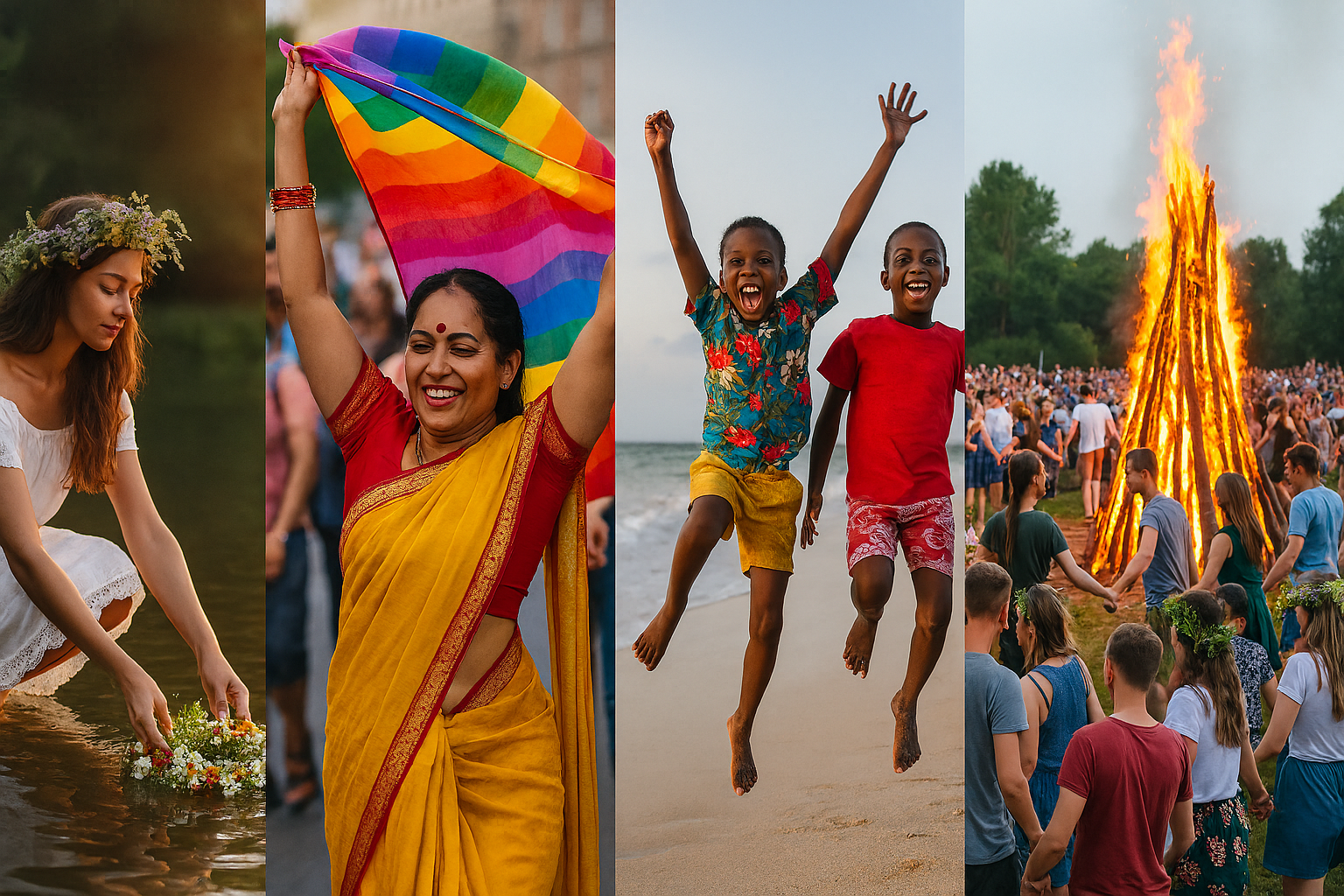
Summer isn’t just a season — it’s a global celebration of warmth, light, and renewal. Across continents and cultures, people gather to honor the sun, welcome long days, and embrace traditions that stretch back thousands of years. From fire festivals and ancient rituals to modern celebrations filled with food, music, and community, summer is a season that unites the world in joy.
This guide explores the most fascinating summer traditions across the globe — including solstice celebrations, cultural festivals, symbolic foods, and the rituals that make this season feel magical no matter where you live.
🌞 Summer Fast Facts
- Longest Day: The summer solstice marks the peak of daylight in the Northern Hemisphere.
- Global Celebrations: From Sweden’s Midsummer to Japan’s Sumidagawa Fireworks, nearly every culture honors the season of light.
- Symbolic Elements: Fire, water, flowers, and seasonal foods appear in summer rituals worldwide.
- Ancient Roots: Many modern festivals trace back to solstice ceremonies thousands of years old.
- Shared Themes: Community, abundance, warmth, and renewal unite summer traditions across cultures.
🌞 Why Summer Traditions Matter
Summer traditions often revolve around three universal themes:
- Light — honoring the sun at its peak
- Community — gathering with friends, family, and neighbors
- Nature — celebrating growth, warmth, and the outdoors
These rituals help mark the passage of time, strengthen cultural identity, and create shared memories that last long after the season ends.
1. Europe’s Ancient Summer Solstice Celebrations
🇵🇱 Wianki – Poland’s Wreath‑Floating Festival
One of Europe’s most enchanting summer traditions is Wianki, a Polish festival with roots in pagan solstice rituals. Women weave flower wreaths and float them down rivers to predict their romantic future. Today, Wianki blends ancient symbolism with modern concerts, fireworks, and citywide celebrations.
Symbolism:
- Wreaths represent youth, beauty, and the fleeting nature of summer
- Water symbolizes destiny and the flow of life
🇸🇪 Midsummer in Sweden – Maypoles, Flowers & Feasting
Sweden’s Midsummer is one of the most iconic summer celebrations in the world. Families gather to raise maypoles, dance traditional folk steps, and feast on pickled herring, potatoes, and strawberries.
Why it’s beloved:
- It marks the longest day of the year
- It’s considered as important as Christmas
- Flower crowns and outdoor games create a joyful, carefree atmosphere
🇫🇮 Finland’s Juhannus – Bonfires by the Water
In Finland, Juhannus is celebrated with lakeside bonfires, sauna rituals, and late‑night gatherings under the midnight sun. Many Finns head to summer cottages to relax, swim, and enjoy the peacefulness of nature.
2. Asia’s Vibrant Summer Festivals
🇯🇵 Sumidagawa Fireworks Festival – Tokyo’s Summer Sky Show
Japan’s summer is filled with festivals, but the Sumidagawa Fireworks Festival stands out as one of the oldest and most spectacular. Millions gather along the Sumida River to watch elaborate firework displays that light up the night sky.
Fun fact:
The tradition dates back to the 1700s and was originally meant to honor the dead and ward off evil spirits.
🇨🇳 The Hungry Ghost Festival – Honoring Ancestors
While not strictly a “summer party,” the Hungry Ghost Festival is a major seasonal event in many Chinese communities. Families prepare food offerings, burn incense, and perform rituals to honor ancestors and wandering spirits.
Why it matters:
It blends respect, remembrance, and cultural storytelling — all during the warmest months of the year.
🇮🇳 Rath Yatra – India’s Grand Chariot Festival
In India, the summer season brings Rath Yatra, a massive festival where enormous chariots carrying deities are pulled through the streets. It’s a vibrant display of devotion, color, and community.
3. North American Summer Traditions
🇺🇸 Fourth of July – Fireworks & Freedom
In the United States, summer is synonymous with Independence Day. Families gather for barbecues, parades, and fireworks that light up the night sky.
🇨🇦 Canada Day – Red, White & Summer Pride
Canada Day celebrations include concerts, outdoor festivals, and fireworks — all wrapped in a wave of national pride and summer joy.
🌽 County Fairs & Summer Festivals
Across North America, summer means:
- Ferris wheels
- Fried foods
- Livestock shows
- Live music
- Community gatherings
These fairs celebrate agriculture, local culture, and the simple pleasures of summertime.
4. South American Summer Traditions
Remember: South America’s summer occurs December through February, but many traditions still reflect the same themes of warmth and celebration.
🇧🇷 Festa Junina – Brazil’s Fire & Dance Festival
Despite the name (“June Festival”), Festa Junina celebrates rural life with bonfires, folk dances, and colorful costumes. It honors saints, harvests, and the joy of community gatherings.
🇦🇷 Argentina’s Summer Carnivals
Argentina’s summer carnivals feature parades, drumming, dancing, and elaborate costumes — a lively celebration of culture and creativity.
5. African Summer Traditions
🇿🇦 Heritage Day – Braai & Community
In South Africa, Heritage Day often turns into “National Braai Day,” where families gather for outdoor cooking, storytelling, and cultural pride.
🔥 Fire Rituals Across the Continent
Many African cultures use fire as a symbol of cleansing, protection, and renewal — themes that align beautifully with the spirit of summer.
6. Oceania’s Summer Celebrations
🇦🇺 Australia Day – Beach, Barbecue & Sunshine
Australia’s summer peaks in January, making Australia Day a warm-weather celebration filled with beach trips, barbecues, and outdoor festivals.
🇳🇿 Matariki – Māori New Year
New Zealand’s Matariki marks the rising of the Pleiades star cluster and celebrates renewal, remembrance, and the start of a new year.
7. The Universal Language of Summer: Food, Fire & Festivals
Across cultures, three elements appear again and again:
🔥 Fire
- Bonfires
- Fireworks
- Lanterns
- Candle rituals
Fire symbolizes protection, celebration, and the power of the sun.
🍉 Food
Summer foods often include:
- Fresh fruits
- Grilled meats
- Seasonal vegetables
- Festival sweets
Food brings people together and marks the abundance of the season.
🎉 Festivals
Whether it’s dancing around a maypole or watching fireworks over a river, festivals create shared joy and lasting memories.
8. Why Summer Traditions Continue to Thrive
Even in a modern world, these traditions endure because they offer:
- A connection to nature
- A sense of community
- A break from routine
- A celebration of life’s simple pleasures
Summer traditions remind us to slow down, enjoy the sunlight, and appreciate the warmth — both literal and emotional — that this season brings.
Conclusion: A Season the Whole World Shares
From Poland’s floating wreaths to Japan’s fireworks, from Scandinavian maypoles to African fire rituals, summer is a season that unites cultures across the globe. Each tradition tells a story — of history, of community, of the human desire to celebrate light.
Whether you’re exploring your own heritage or discovering new customs, these global summer traditions offer a beautiful reminder: no matter where we live, the sun brings us together.
Common Questions About Global Summer Celebrations (FAQ)
Why do different countries start summer on different dates?
Because countries use different seasonal systems. Many Western nations follow the astronomical seasons, which begin with the June solstice. Others—like Australia and much of the Southern Hemisphere—use meteorological seasons, which divide the year into fixed three‑month blocks.
What is the June solstice and why is it important?
The June solstice marks the moment when the Northern Hemisphere is tilted closest to the Sun. It brings the longest day of the year for northern regions and the shortest day for southern regions. Many cultures celebrate it as a symbol of light, renewal, and seasonal change.
Do all countries celebrate the start of summer?
Not formally. Some cultures mark the solstice with festivals, while others simply enjoy the seasonal shift. Countries like Sweden, Latvia, and Lithuania have major midsummer traditions, while others focus more on school holidays or local seasonal events.
Why does the Southern Hemisphere have winter when the Northern Hemisphere has summer?
It’s all about Earth’s 23.5° axial tilt. When the Northern Hemisphere leans toward the Sun, it receives more direct sunlight (summer), while the Southern Hemisphere leans away (winter), and vice versa.
What are some popular global summer traditions?
- Midsummer festivals in Scandinavia
- Bonfires and folk dances across Europe
- Beach festivals in Japan and Brazil
- Outdoor night markets in Southeast Asia
- Music festivals worldwide
Why do some countries celebrate Midsummer days after the solstice?
Many midsummer holidays follow traditional cultural calendars, not the astronomical date. For example, Sweden’s Midsummer Eve is held on the Friday between June 19–25, making it easier for communities to gather.
Are summer celebrations the same every year?
The themes stay consistent—light, warmth, nature, and community—but the dates can shift slightly depending on the solstice, local calendars, or weekend scheduling.